

You said YES! and you're floating on that happy cloud — congratulations on your engagement, from everyone at Trouwplan! Now the planning for that one beautiful day begins. Planning a wedding can quickly feel like a list with no end. The answer isn't to work harder, it's to start smarter: the decisions that shape everything else first, then the rest. Here's the order that works best for most couples.
Where to start
Before you tour a single venue, it helps to agree on three things together: roughly when you want to get married, how many (and which) people you want there, and roughly what it should cost. These three choices shape almost everything that follows — the date limits which venues are still available, the guest count determines which venues, halls and suppliers fit, and the budget shapes the rest. Pin these down early, even roughly. You'll likely adjust them later, but without a starting point you'll keep going in circles.
How Trouwplan helps with this
As soon as you create a wedding, you have a shared place for the date, guest count and budget — visible to both of you, and easy to share with anyone else you want involved.
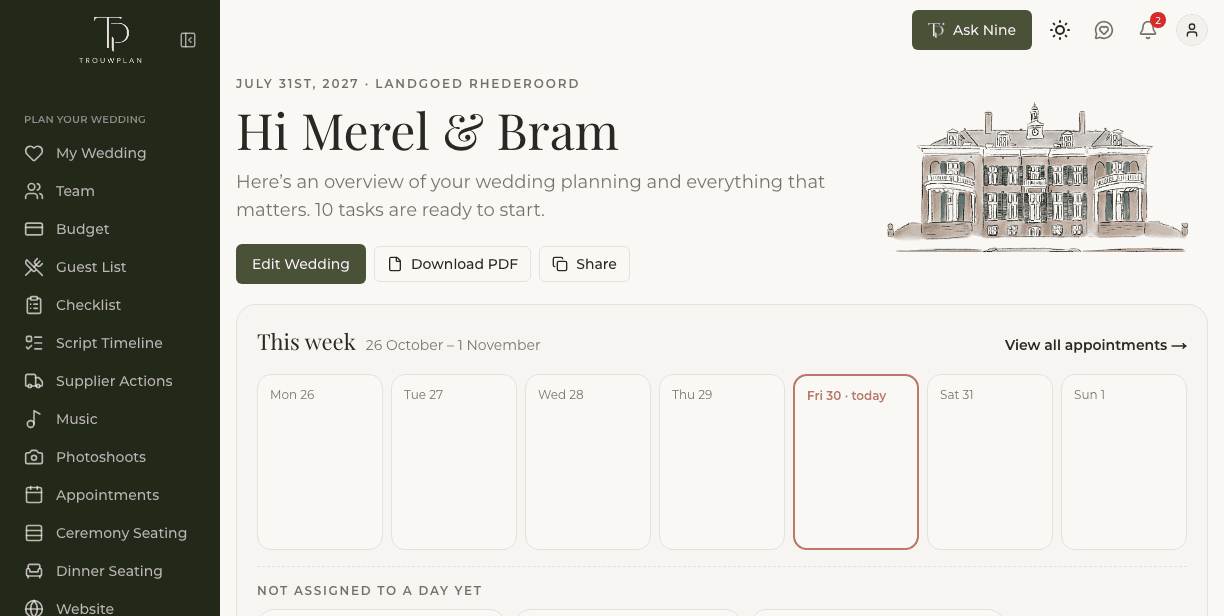
Setting your budget and guest count
Your guest count and your budget are more closely linked than most couples expect going in: every guest you add costs something somewhere, whether it's the ceremony, the food, the drinks, or the venue. Start with a rough total budget, split it across the big categories — venue, catering, photography, attire, decoration — and work out how many guests fit alongside it. That way you won't discover halfway through planning that the guest list has already outgrown the budget. Keep a buffer of around ten percent too; something unexpected almost always comes up.
How Trouwplan helps with this
The budget page tracks what you planned against what you've actually spent, category by category, so you always know where you stand instead of digging through a pile of receipts afterwards. The guest list grows alongside it automatically, including who's already responded to the invitation.

When to book the venue and key suppliers
The venue is almost always the first big decision, simply because the popular ones book up fast — sometimes more than a year ahead. Once that's settled, book the suppliers who are also in short supply: the photographer, the caterer, and the band or DJ, roughly in that order of urgency. Other choices, like a florist, makeup artist, or wedding car, can comfortably wait a few months — there's usually more availability there. Ask every supplier you're considering for references from past weddings, and always get agreements in writing, even if the conversation felt completely informal.
How Trouwplan helps with this
Add your supplier straight to your own running order, with contact details and arrangements kept together. You can optionally invite the supplier to log in to your Trouwplan workspace too, which makes it easy to share the running order, guest list and more. The supplier directory also has photographers, venues, caterers and more, by the way.

Dividing tasks fairly between you
You plan a wedding together, but that doesn't mean you have to do everything together. Most couples find it easier to split things up — you might arrange the venue together, say, while one of you handles hair, makeup and styling and the other handles music. That way nothing falls on one person alone, and it stays manageable — and fun — for both of you. Feel free to bring family or friends in on specific tasks too, like arranging transport for guests, helping decorate the venue, or helping run the ceremony.
How Trouwplan helps with this
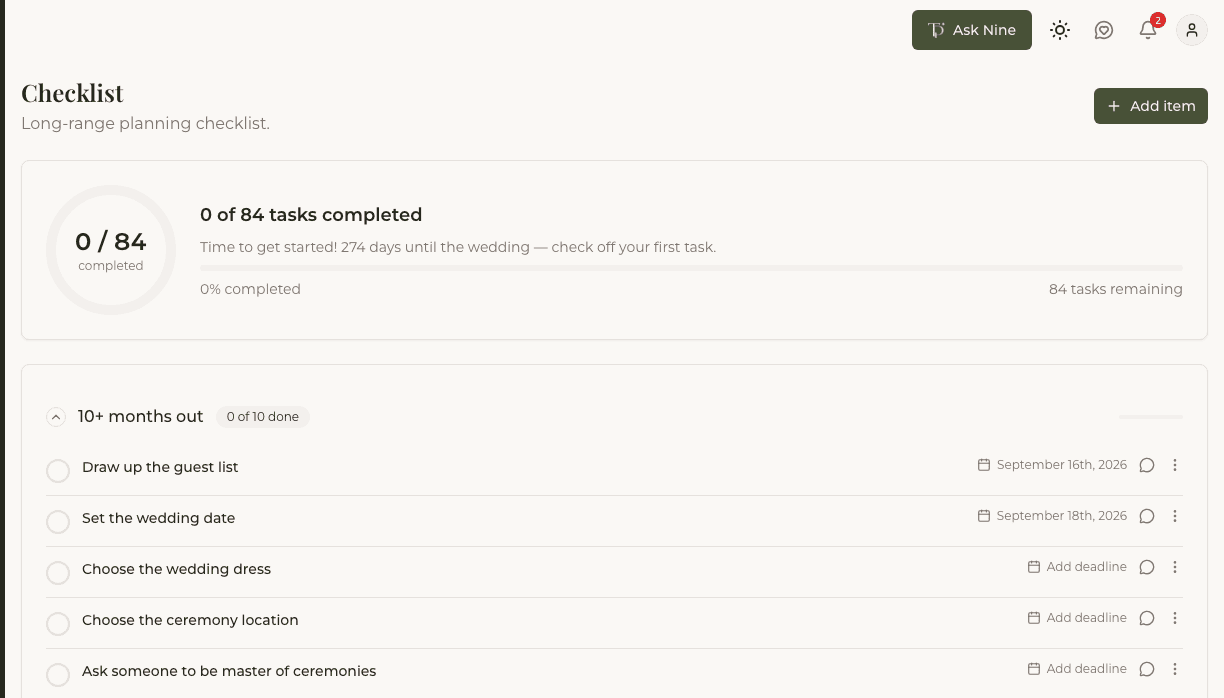
The moment you create an account, we automatically fill your wedding with the most common wedding checklist items — you can of course adjust them or add your own. Give your partner, family, or your officiant access to your wedding, so everyone sees the same up-to-date guest list, checklist, schedule, and more (you decide what they see) — no one has to ask what the latest status is or what's still left to do.
Preparing the wedding-day timeline
In the final weeks before the wedding, the focus shifts from planning to execution. This is the moment to put together a detailed run-through of the day itself: what time hair and makeup starts, when the photographer arrives, what time the ceremony begins, and what happens during every hour of the reception and party afterwards. Share this not just with yourself, but with your officiant, your suppliers, and everyone else with a role that day — so everyone knows where to be, without having to come and ask you.
How Trouwplan helps with this
The running order lets you build that timeline clearly, from the first preparations to the last dance, and share it with everyone who needs it — so you can actually enjoy the day yourself. The moment you create an account, Trouwplan automatically fills your wedding with a fairly standard running order, which you can of course adjust as you like.